

The idea for a notification detox started with a small annoyance that had become a big problem. Every few minutes, someone's phone buzzed. A news alert. A delivery update. A game reminder. A school message. A group chat. None of these were emergencies, but together they made our kitchen table feel like a train station announcement board. My wife Morgan noticed it first. She said she could not read a page of a book without checking her phone. I did not want to admit it, but I had the same problem. So we decided to try a one-week notification detox as a family.
This was not a screen-free week. We did not lock devices in a drawer or ban technology. We simply turned off nearly every notification that was not from a real person trying to reach us directly. That distinction turned out to be the most useful part of the experiment. A notification is supposed to alert you to something important. Most of ours were not important. They were just loud.
I am writing this at my kitchen table in Raleigh, where I test most of the family technology tips on this blog. I am not a digital wellness expert. I am a parent who spent a decade in IT support and who has watched notifications quietly take over family time. If you have ever felt like your phone is in charge of your attention, this experiment is worth trying. Here is exactly what we did, what we learned, and what we kept.
Why We Tried a Notification Detox
The Tuesday Night That Pushed Us
The final push came on a Tuesday night. Avery was telling me about something that happened at school. I was looking at her, nodding, and also glancing at my phone every time it lit up. She stopped mid-sentence and asked, "Are you listening?" I said yes. I was not. That moment stayed with me. My daughter had noticed something I had been ignoring for months: my attention was being divided by a device that was not even showing me anything urgent.
That is the real cost of notification overload. It is not that you miss something important. It is that you are less present for the things that matter. A notification detox is not about rejecting technology. It is about making technology quieter so the important signals can get through.
What We Wanted to Find Out
Before we started, we set a few honest questions. Would we miss anything that actually mattered? Would the detox create problems at work or school? Would the kids notice a difference? And most importantly, would we want to keep the changes after the week was over? I wrote these questions in a notebook so we could compare our guesses with the actual results.
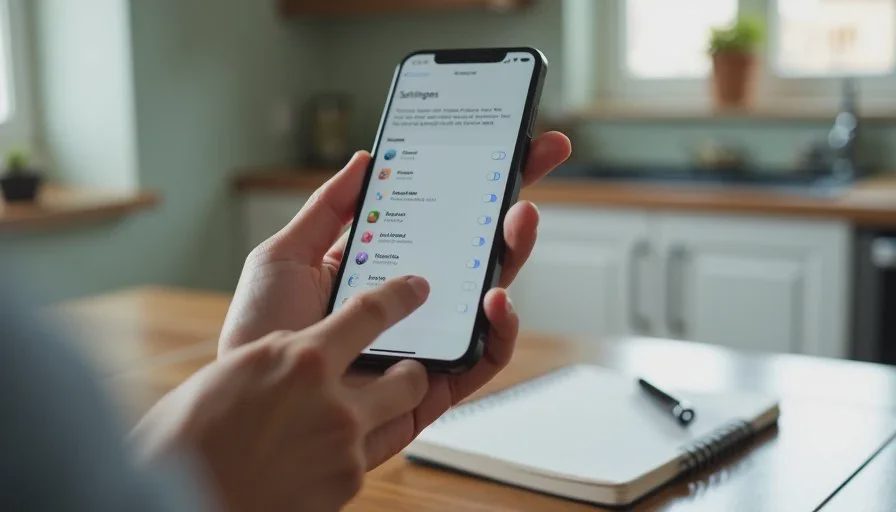
What We Turned Off
The Obvious Noise
We started with the easy categories. News alerts, shopping app promotions, game reminders, delivery updates, and social media notifications all went off. These were the notifications that arrived most often and mattered least. I turned off nearly every app notification on my phone except for messages, calls, and calendar reminders. Morgan did the same. It took about fifteen minutes per phone, and most of that time was spent digging through settings menus.
Group Chats and Non-Urgent Messages
This was the harder decision. Group chats are social, and muting them can feel rude. We compromised. We kept direct messages and calls from real people. We muted group chats that were mostly logistics or memes, and we checked them on our own schedule instead of responding to every buzz. If someone needed us urgently, they could call or send a direct message. That rule worked better than I expected.
Kids' Devices
For the children, we took a different approach. We turned off game notifications and app reminders on their tablets. We kept school-related alerts and family messages. Avery, who is 8, was initially annoyed that her game would no longer tell her when to come back. After two days, she stopped mentioning it. Miles, who is 5, did not seem to notice at all.
The First Two Days Were Uncomfortable
The Phantom Buzz
I did not expect the phantom buzz. For the first two days, I kept feeling my phone vibrate in my pocket when it had not. I reached for it during quiet moments out of pure habit. Morgan described the same thing. We had trained ourselves to check our phones constantly, and removing the alerts did not remove the habit overnight. That was the most surprising part of the notification detox. The notifications were gone, but the reflex remained.
The Fear of Missing Something
The other uncomfortable feeling was the fear of missing something important. What if the school sent an urgent message? What if a client emailed? What if a family member needed us? We checked our phones more often at first, not less, because we were worried. By day three, that anxiety started to fade. We realized that most urgent matters arrive by call or direct message, and those were still on.

What We Actually Missed
Almost Nothing Urgent
By the end of the week, we compared notes. We had missed almost nothing urgent. There were no missed emergencies. No important school messages were lost. No work deadlines slipped because of a notification we did not see. The alerts we turned off were almost entirely promotional, informational, or repetitive. That was the clearest result of the experiment.
A Few Things We Did Miss
We did miss a couple of things. Morgan missed a reminder about a school form that was due. I missed a calendar update for a dentist appointment. Both were minor, and both were solved by checking our calendar once in the morning and once in the evening. The lesson was simple: a reminder is only useful if it arrives when you can act on it. A notification that pops up while you are driving or cooking is not a reminder. It is noise.
What the Kids Noticed
Avery said she felt less distracted while reading. That surprised me. She had not complained about notifications before, but she noticed the difference when they were gone. Miles did not have much to say, but he spent more time building with blocks and less time asking for the tablet. That may have been a coincidence, but it was a welcome one.
What We Kept Off After the Week
Most App Notifications Stay Off
We kept most app notifications off. News, shopping, games, and social media are still silent. If I want to check them, I open the app and look. They do not get to interrupt dinner or homework time.
Direct Messages and Calls Stay On
Direct messages and calls from real people stayed on. These are the signals that actually matter. If a friend or family member is trying to reach us, we want to know. If an app wants us to come back and play, it can wait.
A Daily Check-In Instead of Constant Alerts
Instead of responding to alerts all day, we now do a short check-in twice a day. Once in the morning, once in the evening. We look at messages, calendar items, and anything that needs a reply. This simple routine has replaced hours of scattered checking. It is one of the most practical digital wellness changes we have made as a family.
How to Run Your Own Notification Detox
Start With the Easy Categories
You do not need to turn off everything at once. Start with the categories that clearly do not matter: promotions, news, games, and shopping. Turn those off first and see how it feels. Most people find they do not miss them at all.
Keep Real People and Real Emergencies
Keep notifications from direct messages, calls, and calendar reminders. Keep school alerts if your child's school uses an app for emergencies. The goal is not silence. The goal is to hear the signals that matter and ignore the noise.
Talk to Your Family First
A notification detox works better when the whole family is involved. Talk about it at dinner. Explain why you are doing it. Ask your children what they think. When everyone understands the reason, the experiment becomes a shared project instead of a rule imposed from above.
Give It a Week Before You Decide
Do not judge the experiment on day one. The first two days are the hardest. Give it a full week, then compare notes. You may find, as we did, that most of what you turned off was never important in the first place.
A Quieter House, a Clearer Week
Our notification detox did not change our lives overnight. We still use our phones. We still check messages and calendars. But the house is quieter, and our attention is less divided. That is a meaningful change for a busy family. We spend less time reacting to apps and more time reacting to each other.
If you have ever felt like your phone is in charge, try a one-week notification detox. Turn off the noise. Keep the important signals. See what you actually miss. You may find that the answer is almost nothing, and that the quiet is worth keeping.
Let technology help you live your life—don't let your life revolve around technology.