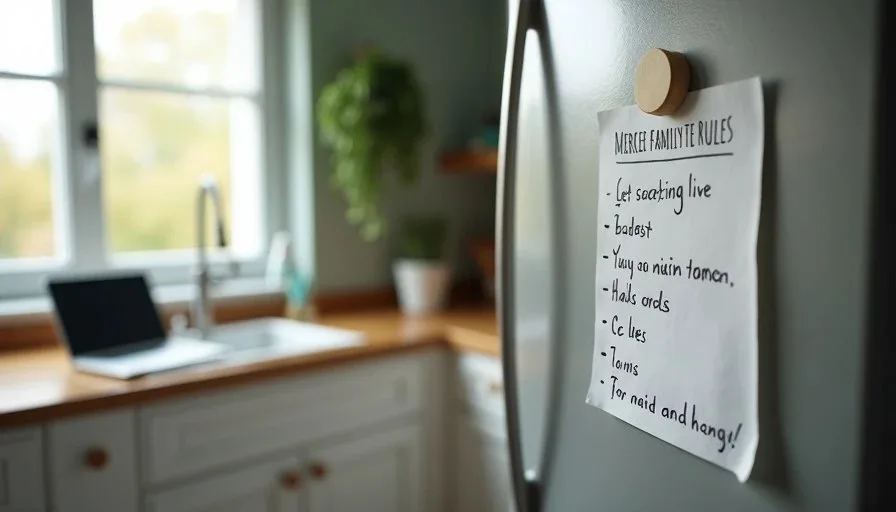
Every family has technology rules, even if they are not written down. Some are spoken at the dinner table. Some are invented in the moment when a child asks for one more episode. Some are enforced by a router that pauses the internet at 8:30 p.m. Our family technology rules started as a short list on the refrigerator. Over the years, they have changed, been rewritten, and occasionally been abandoned. That is the point. A rule that cannot change is not a family rule. It is a fossil.
I am Daniel Mercer, and I write about family technology from my kitchen table in Raleigh. I spent more than a decade in IT support, and I have tested more devices and setups than I can count. But the most useful thing I have built is not a network or a review. It is a short list of screen time rules that work for our family, along with a few principles that keep those rules flexible. This is the final post in our first 20, and I wanted to end with the rules themselves. Not because they are perfect, but because they are ours. If they help you write your own, they have done their job.
Why We Wrote the Rules Down
The Problem With Unspoken Rules
For a long time, our rules were unspoken. "Not too much screen time." "Finish homework first." "No tablets at dinner." These sounded reasonable, but they meant different things to different people. Morgan and I sometimes disagreed without realizing it. The children heard one thing from me and another from her. When rules are unspoken, everyone fills in the blanks with their own assumptions. Writing them down forced us to agree on what we actually meant.
The Two-Parent Test
Every rule had to pass the Two-Parent Test. Could both Morgan and I explain it, enforce it, and adjust it without calling each other for backup? If only one parent understood a rule, it was not a family rule. It was one person's preference. The Two-Parent Test is the reason our rules are short. Long lists are hard to remember and harder to enforce consistently.
The Friction Test
We also applied the Friction Test. Does this rule reduce daily friction, or does it create new arguments? A rule that requires a debate every time it is applied is not working. A rule that everyone understands and can follow without a fight is worth keeping. Some of our early rules failed this test and were removed. That was not a failure. It was editing.

The Rules Themselves
Rule 1: Devices Charge in Shared Spaces
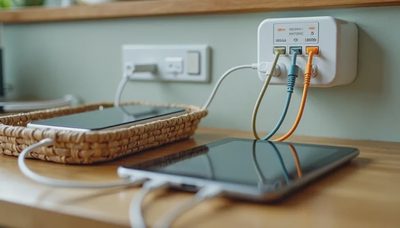
This is our most important rule. Phones, tablets, and headphones charge in the kitchen charging station overnight. Devices do not go to bedrooms. This rule keeps devices off the floor, prevents late-night use, and makes it easy to see when something is missing. It also reduces the number of times we have to search for a charger in the morning. The charging station is the quiet enforcer of this rule. It gives every device a home.
Rule 2: Screen Time Fits the Routine, Not the Clock
We moved away from strict time limits and toward routine anchors. Tablets are used after homework and before dinner. Screens are off during meals. Wind-down time starts at 8:00 p.m. This rule works better for us than counting minutes because it is easier to remember and easier to enforce. It also gives the children a predictable rhythm. They know when screen time happens and when it ends. The router's bedtime pause helps enforce the last part without a nightly argument.
Rule 3: Ask Before You Install
No new app gets installed without asking a parent. This rule applies to tablets, phones, and any device connected to our Wi-Fi. It gives us a chance to review privacy settings, check permissions, and make sure the app is appropriate. It also slows down the impulse to download everything. The rule is simple, and it has prevented more than one privacy surprise.
Rule 4: Passwords Stay in the Family Vault
Passwords for family accounts live in our family password manager. Both parents have access. The children know that family passwords are not shared with friends or written on notes. This rule protects the accounts that matter and teaches the children a habit they will need as adults. It also prevents the "I forgot the password" crisis on a school morning.
Rule 5: Location Sharing Is a Safety Tool, Not a Leash
We use location sharing for arrival alerts and emergencies, not for constant monitoring. The children know why we use it and what it is for. As they grow, we will revisit the settings together. The rule is not "we always know where you are." The rule is "we use this tool to keep you safe, and we respect your privacy."

What We Do Not Do
We Do Not Ban Technology
We are not a screen-free family. We use tablets, phones, smart speakers, and streaming services. Banning technology would not prepare our children for the world they live in. The goal is not zero screens. The goal is intentional use. That distinction shapes every rule we write.
We Do Not Use Fear
We do not tell our children that technology is dangerous or that they will fall behind without the newest device. Fear-based rules create anxiety, not good habits. We explain risks calmly and give clear actions. "Show a parent if something feels wrong" is more useful than "the internet is scary."
We Do Not Treat Specs as More Important Than People
A device with better specs is not automatically better for our family. The best device is the one that both parents can manage, that the children can use safely, and that does not demand constant attention. We have returned devices that looked impressive but failed the Two-Parent Test. That is not a loss. It is a good decision.
We Do Not Expect Perfection
Our children sometimes forget the rules. We sometimes forget to enforce them. A tablet ends up in a bedroom. A password does not get added to the vault. These are small failures, not crises. We correct them and move on. The goal is a system that bends without breaking, not a system that is never tested.
How the Rules Change
They Change as Children Grow
The rules that work for a 5-year-old will not work for a 10-year-old. Miles needs more supervision than Avery. Avery needs more independence than Miles. As they grow, the rules shift. We revisit them every few months, usually at a Sunday evening check-in. The children are part of those conversations. When they are older, they will help write the rules themselves.
They Change When Devices Change
New devices bring new questions. When we added a smart speaker to the kitchen, we added a rule about muting the microphone. When we set up the charging station, we added a rule about where devices charge. The rules are not a fixed document. They are a living list that grows with our home.
They Change When They Stop Working
If a rule causes more friction than it prevents, we change it. We removed a rule about strict time limits because it created daily arguments. We replaced it with routine anchors, which work better for us. Changing a rule is not admitting defeat. It is paying attention.
How to Write Your Own Family Technology Rules
Start With Three Rules
Do not write a ten-page document. Start with three rules that address your biggest daily friction. Charging, screen time, and app installation are good starting points. Keep the list short enough that everyone can remember it.
Involve the Whole Family
Ask each family member what matters to them. Children often have good ideas about what feels fair. When they help write the rules, they are more likely to follow them. The conversation itself is valuable, even if the final list is short.
Make the Rules Visible
Write the rules down and put them somewhere everyone can see. Ours started on the refrigerator. Now they live in a shared note and on a small card near the charging station. Visibility makes the rules easier to remember and easier to discuss.
Review and Revise
Set a reminder to review the rules every few months. Ask what is working and what is not. Adjust as needed. A family technology rule that never changes is probably not being used.
A Living List, Not a Monument
Our family technology rules are not perfect. They are not comprehensive. They are not written in stone. They are a living list that helps our family use technology without letting technology run the family. That is the goal. Not control. Not perfection. Just a little more calm and a little less friction.
If you take one thing from this post, let it be this: write your rules down, keep them short, and be willing to change them. A family rule that everyone understands and can follow is worth more than a long list that nobody remembers. Start with three. Review them in a few months. Let them grow with your family.
That is how we do it at the Mercer house. It is not always tidy, but it works. And when it stops working, we change it. That is the rule behind all the rules.
Let technology help you live your life—don't let your life revolve around technology.