I have tested several pairs of noise-canceling headphones for children in our home in Raleigh, and I have returned more than one pair. The box usually promises “premium sound,” “active noise cancellation,” and “kid-friendly design.” What it rarely tells you is whether the headphones will survive a school year, whether the volume limit actually works, or whether your child will keep them on for more than ten minutes. This is a family tech product review from the perspective of a parent who spent a decade in IT support and now writes about simple technology for busy parents.
Children’s headphones are not just smaller versions of adult headphones. They have different priorities. Volume limits matter more than bass. Comfort matters more than style. Durability matters more than a premium brand name. And privacy matters more than most parents realize, because many kids’ headphones now include microphones and companion apps. This guide will walk through what actually matters beyond the box, based on real use with my own kids and the families I help.
Why Noise-Canceling Headphones for Children Are Different
Volume Limits Matter More Than Noise Cancellation
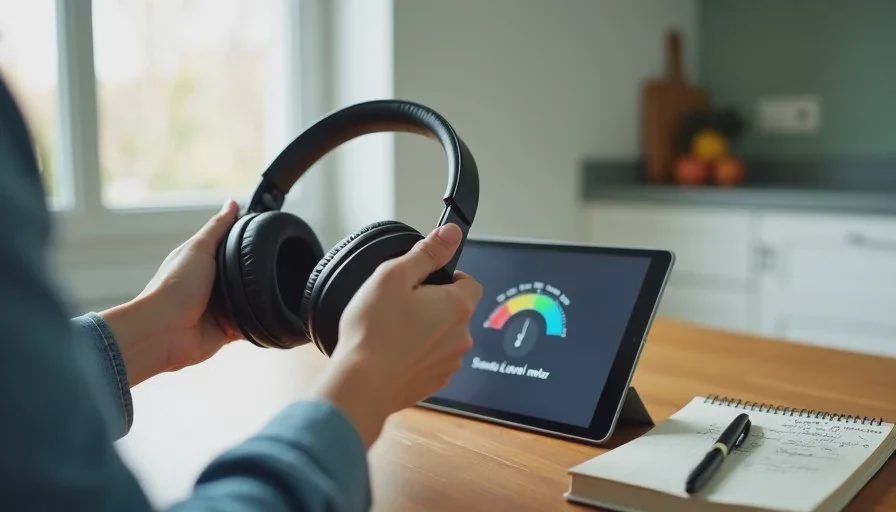
The first thing to understand is that noise cancellation is not the main safety feature. The volume limit is. A pair of headphones can cancel noise perfectly and still play audio at a level that damages hearing over time. A good kids’ headphone limits the maximum volume, usually to around 85 decibels. That limit is the feature I check first. Noise cancellation is a comfort feature. Volume limiting is a health feature.
When Avery started using headphones for school, I looked for a pair with a hard volume cap, not just a “volume limiting” sticker. Some headphones claim to limit volume but still get loud when connected to certain devices. I tested each pair by playing a loud track and listening at the maximum setting. If it was uncomfortable for me, it was not safe for an 8-year-old.
Active vs. Passive Noise Reduction
There are two kinds of noise reduction. Active noise cancellation, or ANC, uses electronics to cancel background sound. Passive noise reduction uses the physical design of the ear cups to block sound. For children, passive reduction is often enough. A well-fitting over-ear headphone with good padding can block a surprising amount of noise without any electronics. ANC adds cost, weight, and battery needs. It can help on airplanes or in loud cars, but it is not required for most home use.
What to Look For Beyond the Box
Volume Limiting and Safe Listening
Look for a clear volume limit, ideally one that cannot be easily turned off by a child. Some headphones have a switch that parents can set. Others have a fixed limit. I prefer the fixed limit for younger children, because there is no switch to forget. For older children, a parent-controlled switch is acceptable if both parents know how to use it.
Also check how the headphones connect. Bluetooth headphones can sometimes exceed the volume limit depending on the source device. Wired headphones with a built-in limiter are often more predictable. If you choose Bluetooth, test the maximum volume with your child’s tablet before you rely on it.
Comfort and Fit for Small Heads
A headphone that does not fit well will not be worn. Look for adjustable headbands, soft ear cushions, and a weight that is appropriate for a child. Over-ear headphones usually fit better than on-ear models for young children, because they distribute pressure more evenly. If your child wears glasses, check that the ear cushions do not press the frames into the side of the head.
We tested one pair that sounded great but slid off Miles’s head every time he looked down. It did not matter how good the noise cancellation was. He would not wear them. Fit is not a minor detail. It is the difference between a useful tool and a drawer ornament.
Durability and Battery Life
Children are hard on headphones. Look for a flexible headband, reinforced cables, and a carry pouch. A detachable cable is a nice feature because it can be replaced if it breaks. Battery life matters for Bluetooth models. A pair that lasts 20 hours is usually enough for a week of school and a road trip. If the battery dies in the middle of a homework session, the headphones become a problem instead of a helper.
Microphone and App Privacy
Many kids’ headphones now include a microphone and a companion app. The microphone can be useful for video classes, but it also raises privacy questions. Check whether the microphone can be muted easily. Check what the app collects and whether it requires an account. For younger children, I usually prefer headphones without an app. Fewer features often means fewer privacy concerns.
If the headphones do have an app, review the permissions. Turn off location access if it is not needed. Turn off data sharing for advertising. This is the same child privacy settings for apps review I do with every new device. It takes a few minutes and prevents surprises later.
How We Tested at Home
The School-and-Road-Trip Test
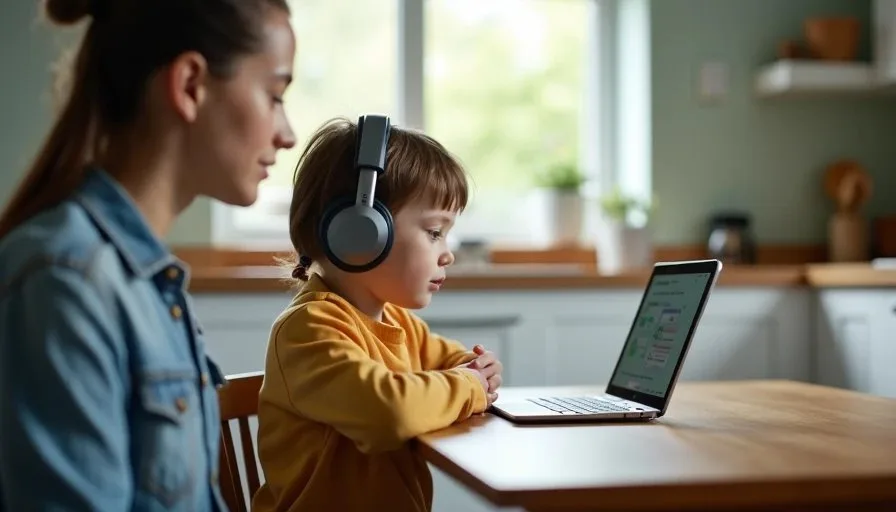
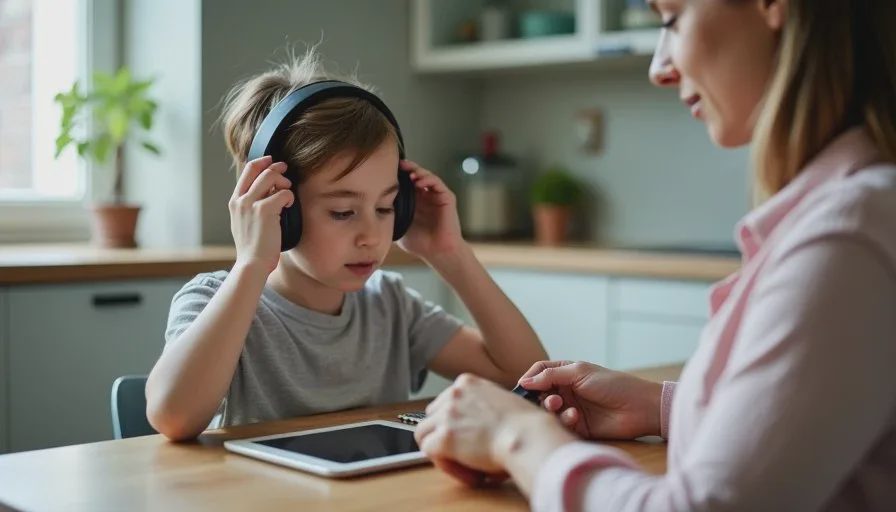
We tested each pair during a real school week and a weekend road trip. At home, the headphones were used for homework, reading, and video calls. On the road, they were used for movies and music. This combination exposed different problems. A pair that worked well at the kitchen table sometimes struggled in the car, where road noise and Bluetooth interference are more common. A pair that sounded fine in a quiet room sometimes revealed a weak microphone during a video call.
The Two-Parent Test
Every pair had to pass the Two-Parent Test. Could Morgan and I both turn on the headphones, adjust the volume limit, and connect them to a tablet without calling each other for help? If the controls were confusing, the headphones failed. A child’s headphone should be simple enough that a tired parent can manage it on a Tuesday morning.
The Child Test
The most important test was whether the children actually wanted to wear them. Avery cared about comfort and whether the headphones felt “too tight.” Miles cared about whether they stayed on during movement. If a pair passed our adult tests but failed the child test, we returned it. There is no point in keeping headphones that nobody wears.
Common Mistakes Parents Make
Assuming ANC Is Always Better
Active noise cancellation is helpful in loud environments, but it is not always necessary. For a child doing homework in a quiet room, passive noise reduction is usually enough. ANC adds weight and cost. It can also create a slight pressure feeling that some children dislike. Do not pay extra for ANC unless your child actually needs it.
Ignoring the Microphone and App Permissions
A microphone on a child’s headphone can be convenient, but it can also be always listening if the app is poorly designed. Check the settings. Mute the microphone when it is not in use. Review the app permissions. This is part of the technology safety checklist for parents that I apply to every new device.
Buying for Features Instead of Fit
It is easy to be impressed by a long list of features. But a headphone that does not fit will not be used. A headphone that is too heavy will cause complaints. A headphone that is hard to charge will sit dead in a backpack. Fit and comfort should come before extra features.
When Noise-Canceling Headphones Help
Homework in a Shared Space
If your child does homework at the kitchen table while someone else is cooking or watching TV, noise-canceling headphones can help them focus. The key is to use them as a tool for a specific task, not as a way to isolate all day. We use them for homework and reading, then put them away.
Travel and Long Car Rides
On long car rides, noise-canceling headphones can make the trip more pleasant for everyone. They reduce road noise and let children listen to audiobooks or music without turning the volume up. For travel, a comfortable over-ear pair with a good volume limit is worth considering.
Sensory Needs and Focus
Some children are sensitive to background noise. For them, noise-canceling headphones can be a genuine support, not a luxury. If your child struggles in loud environments, a pair of well-fitting headphones with passive noise reduction may help. Talk to your child’s teacher or therapist if you are unsure. Technology should support your child’s needs, not replace professional advice.
What I Recommend
Start With Volume Limits
Before you look at noise cancellation, look at the volume limit. A pair with a reliable limit and good fit is better than a pair with ANC and no limit. Safety first.
Choose Comfort Over Specs
Prioritize comfort, weight, and adjustability. If your child will not wear them, nothing else matters. Let your child try them on before you commit. If you buy online, check the return policy.
Keep the Receipt
Children’s headphones are a category where returns are common. Keep the receipt and the packaging until you are sure the pair works for your family. Test them during a school week and a road trip. If they cause complaints or connection problems, return them and try a different pair.
A Final Word on Kids’ Headphones
Noise-canceling headphones for children can be a useful family tech purchase. They can help with focus, travel, and noisy environments. But they are not a magic solution. The features that matter most are often the least exciting: a reliable volume limit, a comfortable fit, and simple controls. Those are the things that determine whether the headphones become a daily helper or a forgotten gadget.
If you are considering a pair, start with the volume limit and the fit. Add noise cancellation only if your child needs it. Review the microphone and app permissions. And test the headphones in real life before you decide. That is how you make a good family tech product decision, beyond the box.
Let technology help you live your life—don't let your life revolve around technology.