
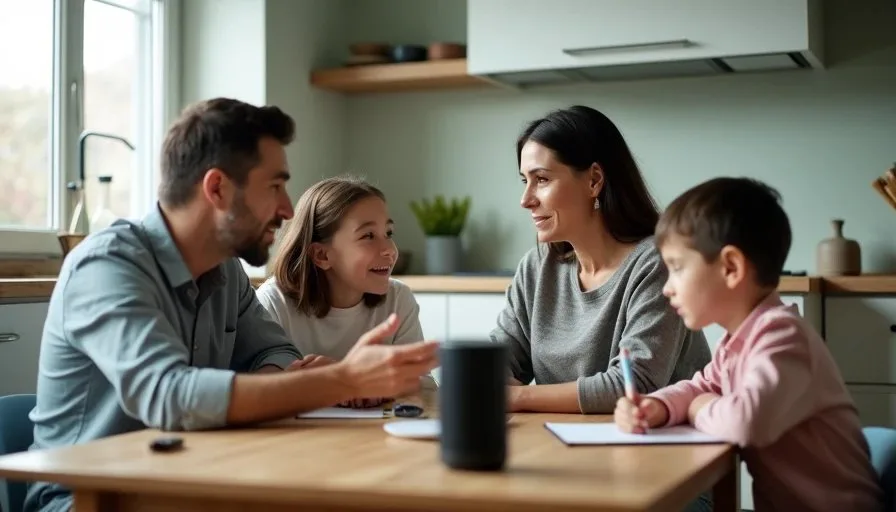
The smart speaker argument started at our kitchen table on a Sunday evening. Avery, who was 7 at the time, had just come home from a friend's house and announced that her friend's family had a smart speaker that could play any song, answer any question, and set timers without anyone touching a phone. She wanted one. Miles, who was 4, wanted one because Avery wanted one. Morgan looked at me with the expression that means “here we go.” I had spent more than a decade in IT support, and I had opinions about smart home devices for families. Morgan had opinions too, mostly about privacy. What followed was not a fight. It was a long, funny, occasionally frustrating family tech product review that happened before we bought anything.
I am Daniel Mercer, and I write about family technology from my kitchen table in Raleigh. This is a Daniel's Kitchen Table post, which means it is a personal story more than a buying guide. But there is a practical lesson inside it. The smart speaker argument we had before buying one taught me more about family tech decisions than any spec sheet could. It also reminded me that the best family technology is the technology everyone in the house actually agrees on.
Why We Even Considered a Smart Speaker
The Convenience Case
The convenience case was obvious. A smart speaker can set timers while your hands are covered in flour. It can play music, answer homework questions, and add items to a shopping list. For a busy family, those small conveniences add up. I liked the idea of a kitchen device that could handle simple tasks without anyone reaching for a phone. That was the version of the smart speaker I imagined.
The Kids' Requests
Avery's request was simple: she wanted to play her favorite songs without asking for a phone. Miles wanted to ask questions about dinosaurs and space. Both of them liked the idea of talking to a device that talked back. As a parent, I understood the appeal. I also knew that a smart speaker in the kitchen would be used by two children who did not always understand privacy, accounts, or what happens to a voice recording after it is stored.
The Argument Itself
Morgan's Concerns
Morgan's first concern was privacy. She did not like the idea of a microphone in the kitchen listening all the time. She wanted to know what data was collected, where it was stored, and who could access it. She also worried about the children treating the speaker like a toy and asking it inappropriate questions. Her second concern was cost. A smart speaker is not expensive, but it often leads to subscriptions, additional devices, and a slow expansion of the smart home. She had seen friends go down that path and did not want the same thing in our house.
My Concerns
My concerns were different. I worried about maintenance. I had set up enough smart devices to know that they need updates, account management, and occasional troubleshooting. I did not want to become the family tech support line for a speaker that could not connect to Wi-Fi. I also worried about the Two-Parent Test. If only I understood how the speaker worked, it would become another device that Morgan could not manage. That would be a failure.
What the Kids Thought
We asked Avery and Miles what they would actually use it for. Avery said music and timers. Miles said questions. We asked if they would be okay with the speaker not being in their bedrooms. They said yes. We asked if they understood that the speaker might record what they say. Avery said, “Like when we talk to the tablet?” That was a useful moment. She already understood that devices collect information. She just did not know the details.
What We Actually Tested
The Privacy Settings
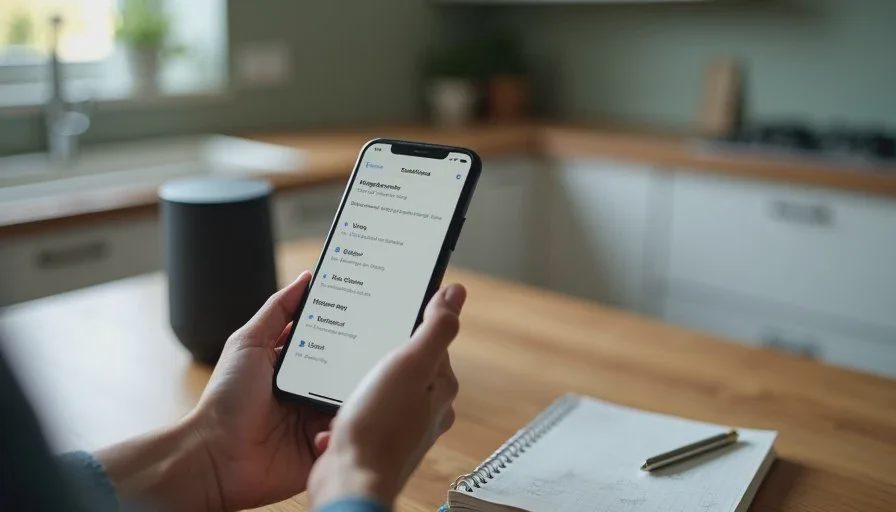
Before we considered buying, I read about the privacy settings on the major smart speakers. I wanted to know how to turn off voice recording, how to delete recordings, and how to mute the microphone. I also wanted to know whether the device had a physical mute button. That feature mattered to Morgan. A physical mute button is simple and visible. It does not require an app or a password.
The Daily Use Test
We borrowed a friend's smart speaker for a week. We placed it on the kitchen counter, set it up, and used it as we would if we owned it. We played music, set timers, and asked questions. We also watched how the children interacted with it. Avery used it mostly for music. Miles asked questions for the first two days and then lost interest. Morgan used it for timers. I used it for weather and news. The daily use test showed us that the speaker was useful, but not essential.
The Maintenance Test
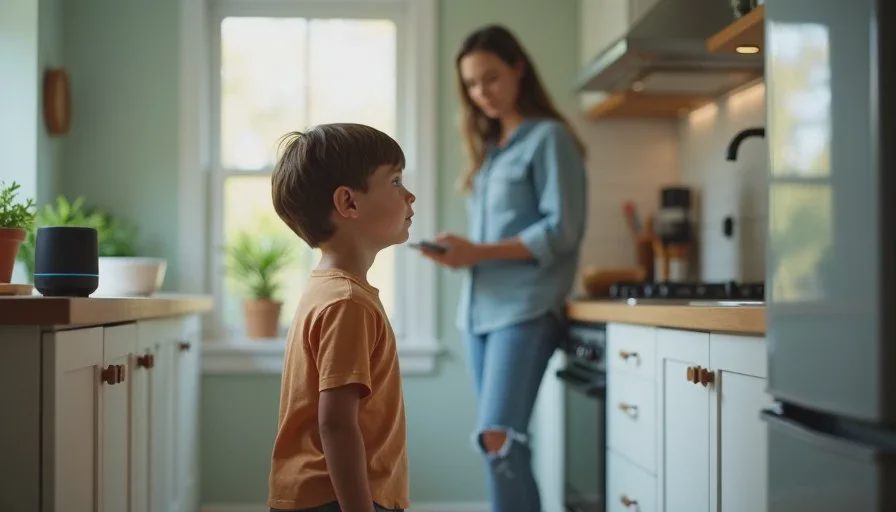
The maintenance test was the most revealing. During the week, the speaker needed a software update, a Wi-Fi reconnection, and a reset of the voice recognition. None of these were difficult, but they required attention. Morgan watched me do the first update and said, “This is the part nobody puts on the box.” She was right. The maintenance was the hidden cost. The speaker worked well when it worked. When it did not, it became a small project.
The Compromise We Reached
One Speaker, Clear Rules
We decided to buy one smart speaker for the kitchen, not for the bedrooms or the living room. We set clear rules. The microphone would be muted when we were not using it. The children would ask before using it to play music. No personal information would be shared with the speaker. No shopping through the speaker. No accounts beyond the basic setup.
The Two-Parent Setup
Morgan and I set up the speaker together. She learned how to mute the microphone, check the privacy settings, and reconnect it to Wi-Fi. I learned to stop explaining things in technical language. The setup took about twenty minutes. That twenty minutes made the difference. Both of us could manage the speaker, and both of us could explain the rules to the children.
What We Kept
The smart speaker has become a quiet helper in our kitchen. We use it for timers, music, and the occasional question. It is not the center of our home. It is a tool. The children use it less than we expected, which is fine. The microphone is muted when we are not using it. The privacy settings are reviewed every few months. The maintenance is manageable because we keep the setup simple.
What This Argument Taught Me
Talk Before You Buy
The smart speaker argument was more useful than the purchase itself. It forced us to talk about privacy, cost, maintenance, and expectations before the device entered our home. That conversation prevented disappointment and resentment. If we had bought the speaker without talking, Morgan would have felt unheard, and I would have felt blamed for every technical problem.
Test Before You Commit
Borrowing a speaker for a week was the best decision we made. It gave us real information instead of marketing promises. A trial period, even a short one, is worth more than a dozen reviews. If you cannot borrow a device, read return policies carefully. A device that can be returned is a device you can test.
Keep It Simple
The smart speaker works for us because we kept it simple. One speaker. Clear rules. A physical mute button. No subscriptions. No expansion into every room. The simplicity is what makes it sustainable. A smart home device for families should reduce friction, not add a new layer of management.
Advice for Other Families
If you are considering a smart speaker, start with a conversation. Ask what each person wants from it. Ask what worries each person. Then test it if you can. Set clear rules before you set it up. Make sure both parents can manage it. Keep the setup simple. And be willing to return it if it does not fit.
The smart speaker argument we had before buying one was not a waste of time. It was the most important part of the decision. The device itself is a small thing. The agreement around it is what makes it work. If your family can have that conversation, you are already ahead. If you cannot, the speaker will not solve the problem. It will just add a microphone to it.
Let technology help you live your life—don't let your life revolve around technology.