

Avery came to me last year with a message on her tablet. It said she had won a free prize and just needed to tap a link to claim it. She was excited. She asked if it was real. That moment, standing in our kitchen in Raleigh, was a teaching opportunity I did not want to waste. Teaching children about online scams is not about making the internet sound terrifying. It is about giving them the tools to recognize when something is too good to be true.
I spent more than a decade in IT support, and I have seen how scams work from the inside. I have also watched smart adults fall for them, which is why I do not expect a child to figure it out alone. Children are targeted because they are trusting and because they do not yet have the life experience to spot the warning signs. The good news is that online safety for kids does not require a lecture. It requires everyday examples, short conversations, and a few simple rules they can remember.
This guide is part of the Safe by Default series. The goal is protection without paranoia. I am not going to tell you to ban the internet or to treat every message as a threat. I am going to show you how to talk about scams in a way that children understand and remember. The approach works for kids as young as six and can be adapted for teenagers.
Why Children Are Targeted by Scammers
Trust Is a Strength, Not a Weakness
Children are naturally trusting. That is a good quality, and I do not want to train it out of them. But scammers take advantage of that trust. They use friendly language, exciting prizes, and urgent requests. A child who has not seen these tricks before may not recognize them. That is not a failure of intelligence. It is a gap in experience.
The Urgency Trick
Many scams rely on urgency. "Act now." "Your account will be closed." "You have won a prize, claim it today." Urgency is designed to make you act before you think. Children feel urgency strongly, especially when something exciting is involved. Teaching them to pause and ask a parent is one of the most useful habits you can build.
The Familiar Logo Trick
Scammers often copy logos from brands children recognize. A fake message might look like it comes from a game they play or a store they know. The logo creates a false sense of trust. Children see the logo and assume the message is real. Teaching them that logos can be copied is an important lesson.

Everyday Examples That Make Sense to Children
The Fake Prize Message
This is the example I used with Avery. A message said she had won a prize. I asked her a simple question: did you enter a contest? She said no. That was the first clue. I explained that real prizes come from contests you actually entered. If you did not enter, you did not win. That rule is easy to remember and applies to most prize scams.
The "Your Account Is in Trouble" Message
Another common scam tells you that your account will be closed unless you click a link and verify your information. I explained to Avery that real companies do not ask for passwords through a link in a message. If an account has a problem, you go to the app or website yourself, not through a link someone sent you. That habit, going to the source directly, protects against most phishing attempts.
The Friend in Need Message
Older children may encounter messages that appear to come from a friend asking for money or account information. I explained that scammers can copy a friend's profile picture and name. If a friend asks for something unusual, call or text them directly to confirm. Do not reply to the message. This example is especially useful for teenagers who use social media.
The Free Game Currency Offer
Many children play games with in-game currency. Scammers offer free currency in exchange for account information. I told Avery that no legitimate game gives away free currency for a password. If an offer requires your login, it is a trap. That rule is simple enough for a young child to remember.
How to Explain Phishing Without Fear
Use the Fishing Analogy
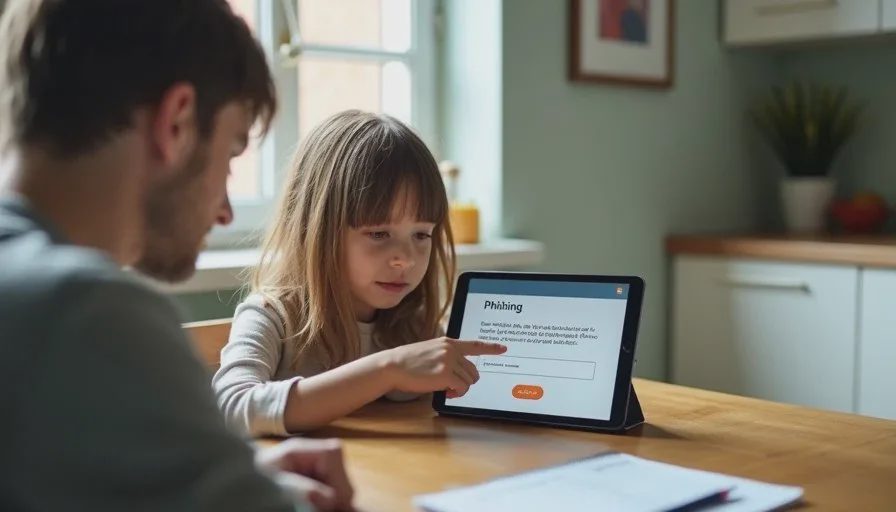
The word phishing comes from fishing. I explained it to Avery this way: a scammer puts out bait and waits for someone to bite. The bait is the exciting prize or the urgent warning. The hook is the link or the request for information. If you do not bite, you do not get caught. This analogy helps children understand the concept without making the internet sound like a dangerous place.
Focus on What to Do, Not Just What to Avoid
It is easy to list all the things children should not do. But children respond better when they know what to do instead. I gave Avery three simple steps. First, stop. Second, do not tap the link. Third, show a parent. Those three steps are easy to remember and give her a clear action.
Keep the Conversation Calm
If you talk about scams with fear, children may become anxious or hide problems from you. I keep the tone calm and practical. The message is not "the internet is dangerous." The message is "some people try to trick others, and here is how you can tell." That framing keeps children confident instead of scared.
Building Everyday Habits That Protect Children
The "Show a Parent" Rule
The most important habit is simple: when in doubt, show a parent. I tell my children that they will never be in trouble for asking. If something looks strange, exciting, or urgent, they should show me before they tap anything. This rule has already prevented at least one accidental click in our home.
The "Did I Enter?" Question
Before believing any prize or offer, ask: did I enter? If the answer is no, the offer is almost certainly fake. This question is easy for children to remember and applies to many situations.
The "Go to the Source" Habit
Instead of clicking links in messages, go to the app or website directly. If a message says your account has a problem, open the app and check. If the problem is real, you will see it there. This habit protects against phishing and teaches children to verify information.
The "No Passwords in Messages" Rule
No legitimate company or friend needs your password through a message. If someone asks for your password, it is a scam. This rule is simple enough for a six-year-old and still relevant for a teenager.
Practicing with Role-Play
Make It a Game
Children learn best through practice. I sometimes create fake scam messages and ask Avery to spot the clues. We make it a game. She looks for urgency, prizes she did not win, and requests for information. This practice builds confidence and makes the lessons stick.
Use Real Examples from the News
When you hear about a scam, share it with your children in simple terms. You do not need to share every detail. Just explain what happened and what the warning signs were. This keeps the conversation current and shows that scams are a real part of online life, not just a hypothetical.
Praise Good Judgment
When your child spots a scam or asks before clicking, praise them. Positive reinforcement works better than warnings. Avery felt proud when she recognized a fake prize message on her own. That pride will help her stay alert in the future.
What About Older Children and Teenagers?
More Independence, More Risk
Teenagers spend more time online and may encounter more sophisticated scams. They are also more likely to want privacy, which can make it harder for parents to monitor. The key is to keep the conversation open and nonjudgmental. If a teenager feels they will be blamed for a mistake, they may hide it. If they feel supported, they are more likely to ask for help.
Financial Scams and Job Offers
Teenagers may encounter fake job offers, investment schemes, or requests for money from people they met online. Explain that legitimate jobs do not ask for payment upfront and that investment offers with guaranteed returns are almost always scams. These lessons are part of growing up online.
Sextortion and Blackmail
This is a difficult topic, but it is important. Some scammers target teenagers by building trust, then threatening to share private images. Talk to your teenager about this risk without shame. Make sure they know that they can come to you, and that you will help them, not punish them. This conversation can prevent a crisis.
A Simple Family Scam Plan
Stop before you tap. If a message feels urgent or exciting, pause.
Ask: did I enter? If not, it is probably fake.
Do not share passwords in messages.
Go to the app or website directly instead of clicking links.
Show a parent if something feels wrong. You will not be in trouble.
Remember that logos and names can be copied.
The Goal Is Confidence, Not Fear
Teaching children about online scams is not about making them afraid. It is about giving them the confidence to recognize a trick and the habits to respond safely. Children who know what to do are less likely to panic and more likely to ask for help. That is the goal of the Safe by Default approach.
I do not want my children to fear the internet. I want them to use it wisely. That means teaching them to pause, question, and verify. It means keeping the conversation open. And it means reminding them that they can always come to me, no matter what. That is protection without paranoia. That is safety by default.
Let technology help you live your life—don't let your life revolve around technology.